Showing posts with label bonsai. Show all posts

Thursday, September 10, 2009

The Honolulu Academy of Arts & The Pavillion Cafe...


www.RickNakama.com Honolulu Academy of Arts art museum Over the Labor Day Weekend, we visited the Honolulu Academy of Arts. I estimate that I haven't been there for perhaps 20 years! I used to go there a lot for elementary school field trips and that's the last I remember of it prior to this last weekend. I have been to the Contemporary Museum of Art several times in recent years, but just never made it to the Honolulu Academy of Arts. I think it must be due to the difficult parking options, but Sunday afternoon is a great option for free street parking directly in front!

It is very nice now. I don't even remember the museum having that many things to see back then. I think when we visited for school fielt trips, the tours are cut short to keep elementary school students interested. I definitely know that the galleries were not so well air-conditioned back then and also did not have automatic sensory lighting that would adjust slightly brighter when you entered the gallery. Very impressive renovations done to the Honolulu Academy of Arts since the last time I've been there! =P
www.RickNakama.com Honolulu Academy of Arts art museumI don't have many photos of the great displays of art because photography isn't allowed in the galleries. Although, photography is allowed in the open courtyard areas.

There are some special collections on display right now.

There was a collection of drawings titled "Goya's Disasters of War" by Francisco Goya. They are a very detailed collection of drawings that appears to be done in pencil. Read the museum's description of this collection here.
www.RickNakama.com Honolulu Academy of Arts art museumwww.RickNakama.com Honolulu Academy of Arts art museum
The Honolulu Academy of Arts is on the web at http://www.HonoluluAcademy.org and they are located at 900 South Beretania Street, Honolulu, Hawaii 96814 <--Google Map. General admission is $10 and they do have other discounted admission rates. Their normal hours are Tuesday - Saturday: 10a-430p and Sunday 1p-5p. They are closed on Mondays, New Year's Day, 4th of July, Thanksgiving and Christmas according to their guide sheet. The first Wednesday of every month is supposed to be FREE and you are able to visit the shop, The Pavillion Cafe and the library for free too.
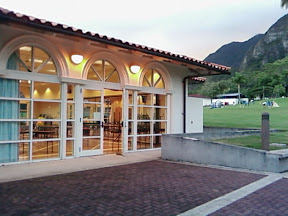
www.RickNakama.com Honolulu Academy of Arts art museum the pavillion cafeWe actually went to the Honolulu Academy of Arts to check out The Pavillion Cafe, but it's not open on Sundays. We're considering the location as a potential spot for an upcoming party. Looks good so far, but I haven't asked if they can accomodate our event yet.

We'll try to check out The Pavillion Cafe another time, but they are only open Tuesday - Saturday during lunch (1130a-2p) so it might be difficult!

Bookmark and Share


Wednesday, August 19, 2009

Excess amounts of $0.39 1st Class Letter Stamps!!


www.RickNakama.com excessive amounts of old 1st class mail stampsA couple of years ago I visited the post office to purchase some stamps. I was purchasing postcard postage stamps for a postcard mail out I was sending out that day. I asked the man working at the post office for 3 rolls of postcard postage stamps ($0.26 stamps at that time). The rolls are rolls of 100 stamps in most cases, which is what I wanted. I also had a few other items to get postage for at the same time. He placed 3 rolls of postage into a package after scanning them to my bill and gave me a total including the rest of my other items I got postage for. I quickly paid with my credit card and moved out of the way so the long line of people waiting could also get on with their lives.

I was planning to stick the stamps on the bundle of postcards while in the post office so I went on the side where there is an area to work on your shipments and I began. I open 1 roll of stamps and start to peel to place them on my postcards. I then realize that the stamp says, "39 First Class"! It was not the stamps I asked for!!! I looked at the other 2 rolls and my receipt. The guy charged me for 3 rolls of $0.39 1st Class stamps and that's what I received in the package!!

I immediately went back in line and waited until I got to go up to the same guy. I told him he sold me the incorrect rolls of postage stamps. I showed them to him and told him I asked for postcard stamp rolls!

I never use 1st class stamps. I rarely ever send anything that takes a 1st class stamp because my bills are sent through an on-line service so I don't even deal with stamps.

Normally, they do not allow returns on postage stamps so I was upset. I had 300 1st class postage stamps that I would most likely never use. The guy spoke with another manager or something at the post office to see what he could do. They let me return the 2 rolls that I didn't open only because it was on the same cash register till that he sold them to me on. Luckily, he didn't leave his cashier post yet! But I am still stuck with 100 $0.39 stamps. I knew I would never use them all, especially before they raise the rate of 1st class letter.

Anyway, here I am today... still stuck with that stupid roll of $0.39 stamps. I think I used maybe 3 so far. The current rate for 1st class letter is $0.44. I should probably stash this roll and wait until the postage for a 1st class letter goes up to $0.78. Then I can just stick 2 of these on the envelope and get rid of them simpler.

Of course, some of you may feel I should have reviewed my purchases prior to signing away on the credit card screen. Well, I didn't. So I will deal with these stupid stamps for the rest of eternity. Each time I get one out, it will be a reminder that I should carefully review those electronic credit card pads and thoroughly question every cashier about what is on my bill prior to signing it.

Hopefully you aren't stuck in the line behind me... = P

Bookmark and Share


Monday, August 3, 2009

Orchid & Bonsai Show at Kalani High School


www.RickNakama.com Kalani High School Orchid & Bonsai ShowA couple weekends ago we stopped by at the Orchid and Bonsai Show at Kalani High School. It's been years since I've stepped into the Kalani High School cafeteria (that's my alma mater). I received some complimentary entry cards which are more like reminder cards. The orchid organizations that organize the show just ask for a donation at the door.

There were many beautiful orchids to look at and/or purchase. I was amazed at how they are able to get them all to bloom for the show. There must be some secret trick to that. There were some really interesting ones that had scents. Even some that smelled like chocolate! I tried to find a vanilla orchid there, but nobody had any. There were some super small orchids. The flower actually looked like a "normal" orchid, but it was soooo small. Like a half a centimeter in size or so. That was amazing!

Another feature at this show was the miniature Japanese town. Take a look at the photo. Almost looks like I took a picture of a real Japanese house in the country. It's really neat. Someone should bring their train set and set it up to run along the Japanese town at the next show! :)


Bookmark and Share


Monday, April 27, 2009

Lanai / Balcony / Veranda Gardening


Here's an update on what's going on in my lanai gardening...

After working many years in the Waikiki hotel business, I have learned that not everyone knows what a "lanai" is. I guess it depends on where you are from if you are familiar with the word or not. We here in Hawaii commonly refer to lanais as a lanai where others may call them balconies or verandas.

Anyway, with that out of the way, gardening on a lanai has been a challenge for me. I have always grown things in regular gardens because I grew up in a regular house. These past several years, I have been experimenting with options available to have an efficient and visibly pleasing garden on my lanai.

condo lanai garden tomato www.RickNakama.comThis is one of my latest experiments to add to my lanai. I thought of this after seeing one of those infomercials selling what is called a "Topsy Turvy". (I don't want to post a photo of it here, but I'm sure you can find it if you Google it.) If you don't know what it is, it's an unattractive hanging green tube that allows you to grow a tomato plant out of the bottom. (Just Google it if you don't understand.)

I didn't want to have that unattractive thing hanging on my lanai because not only would it be something I would see, it's also something the neighboring buildings would have to see. I decided to pick up a coconut fiber hanging basket from Target (which recently opened in Honolulu) for about $8.

Then I started some tomato seeds in a tall cup of soil until it grew to about an inch in size. The height of the cup actually was the same height of the dome of the coconut basket if turned upside-down. I used a "venti" size plastic cup from a giant coffee producer.

When the seedling reached about an inch high, I made a hole in the coconut fiber with my finger in the center of the domed area. With the hole large enough to fit the tomato seedling through it without damaging the seedling, I carefully placed the upside-down coconut fiber basket over the cup with the seedling in it. I made sure the seedling peered through the hole in the coconut fibers. Next, I let it grow under the grow lights for about another month. It grew to about 2-3 inches; the size it shows in these photos.

hanging tomato basket www.RickNakama.com TOPICYesterday, I decided it was time to turn my coconut basket "right-side-up" which would make my tomato hang out of the bottom. I took this photo because I was amazed that after only 1 day of hanging upside-down, the tomato plant seems to have turned itself to face upwards again. Very quickly!

hanging tomato basket www.RickNakama.com TOPICOn the top side of the basket I planted some basil, cilantro and oregano. I planted the basil because I read a book one day while I was in Barnes and Nobles that said it was good to plant basil plants with tomato plants. I don't remember the name of the book now, but I'm sure I'll find it again.

hanging tomato basket www.RickNakama.com TOPICI also bought this window planter box from Target and started some salad mix seeds and more basil in it a couple months ago.

Saturday, April 25, 2009

Compost Worm Bin


Last weekend, we decided to begin a compost worm bin. Kelli and I have been interested in these composting worms for a while, but just never made the effort to start one. A lot of the procrastination had to do with the start up costs.
www.RickNakama.com Waikiki Worm Company storeThere is a local business woman who has been specializing in providing these compost worms and worm bin kits for several years. Her business is called Waikiki Worm Company. The business recently expanded and is now in a larger retail space just outside of Waikiki, at 1917 S. King Street.
We started with the basic set up. It comes with:
www.RickNakama.com compost worm bin-A 1/4 pound of EPIGEIC Perionyx excavatus, a.k.a. Hawaii's native composting worms. (Click for worm info.) Sold ala carte at Waikiki Worm Company for $40 + tax. It comes in a quart size zip lock bag with some vermicompost that contains the other organisms to help start the composting process.
-A 10 gallon plastic bin with "Waikiki Worm Company" logo and pre-fabricated holes. Of course you could buy this bin from Walmart or somewhere for about $5-$10, but it won't have the official logo on it and you'll need to drill your own holes.
-A basic worm bin starter book titled "Worms Eat My Garbage" by Mary Appelhof. I've read about half of it, not in order. There are interesting parts, but has a lot about designing your own worm bin. I wasn't very interested in that part because I don't really want design information. I enjoyed the parts of the book that gave more explanation on the care of the worms.
-Start up instruction leaflet & couple worm-y bumper stickers.
The total with tax came out to $71.20. The other things we purchased to complete our set up was a larger plastic container to fit under the bin to be used as a drip tray and a couple bricks to prop the bin over the drip tray for adequate ventilation. That was another $10 or so.
www.RickNakama.com Waikiki Worm Company wormswww.RickNakama.com Waikiki Worm Company worms
www.RickNakama.com Waikiki Worm Company wormsWe started with the 1/4 pound because it's suggested that they will be able to keep up with 2 adults average weekly food waste that can be added to the bin. The suggested consumption amount is 2 pounds of fruit, vegetable or grain waste per week.
It takes a while for the entire process to look like vermicompost. In approximately 4-6 months we should have our first batch of nutritious compost for our plants. Right now it just looks like a bunch of worms eating fruit and vegetable waste. I'll post another update when they start to break down more of it.

Video...
From WormBin

Tuesday, November 27, 2007

Bonsai Master Walter Liew's Borders Book Signing...


www.RickNakama.com Bonsai Master Walter Liew Living Art of BonsaiThis past Saturday I went to pick up another autographed copy of Bonsai Master & Author Walter Liew's The Living Art of Bonsai book. It's a great book because it's filled with lots of color pictures and bonsai diagrams for reference. The amazing sale price of 20% off at Borders meant I was able to pick it up for about $13! I had this one autographed for a friend's Christmas present.
Related Links: Master Walter Liew Googled, Google Maps of Dragon Garden, Yellowpages Dragon Garden Listing, Full Size Photo Album, My Bonsai Posts, Borders, The book on Amazon.com.

Wednesday, November 21, 2007

Final "Art of Bonsai" Class with Master Walter Liew...


www.RickNakama.com bonsai master walter liew dragon gardenThe Final Night...

I'm sure I speak for all if not most of the class when I say that we were all anxiously waiting for this final night of education at Master Walter Liew's Dragon Garden Bonsai Cultural Center in Waimanalo while also not wanting the classes to come to an end. The final night of the official Windward Community College Art of Bonsai class covered critiquing, evaluation or judging the artistic quality of bonsai while having a dinner party featuring Mrs. Liew's Lemon Turkey to kick-off the Thanksgiving feasts we'll all be having for this rest of the week.

www.RickNakama.com bonsai master walter liew dragon gardenThe photo above to the left is Master Liew describing how triangles are often seen as the geometrical shape of beauty. He is pointing out that trees in nature as well as in bonsai will usually be in the shape of a traingle if it's considered beautiful to the eye. He made mentions examples of other natural things of beauty that resemble triangles like mountain peaks and trees while pointing out man made triangular shaped things of beauty like architecture in buildings or homes (pyramids too?). The triangular shape represents Heaven (at the top), Man (1 lower corner) & Earth (2nd lower corner). This gives the feeling of balance and makes it beautiful to look at. The photo on the left is from his recently released book, The Living Art of Bonsai, published by Island Heritage Publishing. (More on the book later) We reviewed the principals of the thirds. It's refered to as the "Fibonacci sequence" in his book. Most formal style of bonsai would meet the criteria of the tree and pot being sectioned in thirds and creating balance when looking at it in its entirety.

We also reviewed the design of the pot. The pot should compliment the type of tree. Only if the tree is artistically styled and paired with an appropriate pot will it become a true bonsai. The pot is usually shallow and its width about 1.5 times the height of the tree. The reason the pot should be shallow is because it represents the horizon. A bonsai should be thought of as viewing a naturally beautiful tree in the distance on the horizon.

Master Liew also wanted to express his appreciation for a special honor. In the 55 years of Windward Community College's instructor evaluations, he was just informed that he is the first instructor ever to recieve a 100% "Excellent" rating for being knowledgable about the material presented. Of course, I already placed my excellent rating on the evaluation, obviously... but if anyone is considering pursuing their interest in bonsai this course is a must! If you still aren't certain, just visit Master Liew at his nursery. After that, I'm sure that you will be intrigued!

www.RickNakama.com bonsai master walter liew dragon garden living art of bonsai bookThe Book...

Ok... This is the book all bonsai enthusiasts will want to have. The book that's being described as the most complete, educational and inspriational book about bonsai. Master Walter Liew's very own book, The Living Art of Bonsai, published by Island Heritage Publishing. This book was just released about 3 weeks ago and is flying off the store shelves everywhere. It's retail price is just under $16!!! What a value! Believe me, I'm not a book buyer nor do I read any books (unless it's reference material). I am highly supportive of finding "free" information on the web, but the information provided in this book is not stuff you can just find on the web.

Kelli and I went to his 1st book signing promotion at Queen Emma Summer Palace on November 9th. The signing started at 3pm. Kelli took a couple vacation hours from work so we could get there by 3pm. As soon as the doors opened, 6 of his books were sold! Many other students from class tried to go later in the event and the books were sold out!

If you want to meet the author and Master of Bonsai, Walter Liew, he has a couple book signing scheduled this weekend. I don't know the specific times, but I think Saturday 11/24 he has a signing at Borders Ward Center during the day and a afternoon signing at Windward Borders. Call the stores and ask them about it. At $16 it's a great Christmas gift even if you personally don't want the book I'm sure you know someone that would.
Related Links: Master Walter Liew Googled, Google Maps of Dragon Garden, Yellowpages Dragon Garden Listing, Full Size Photo Album, My Bonsai Posts, Borders, The book on Amazon.com.

Thursday, November 15, 2007

Hydroponic Salad Mix Seedlings...


www.RickNakama.com hydroponics
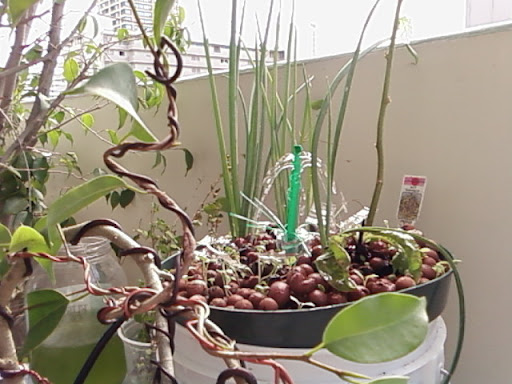
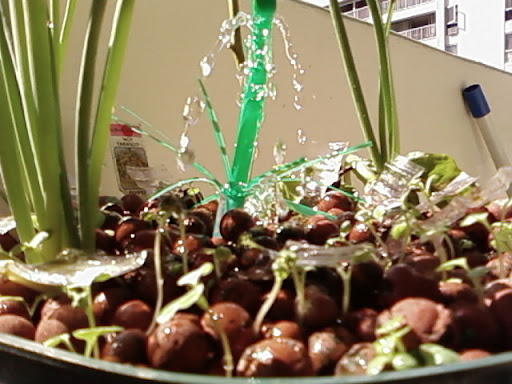
www.RickNakama.com hydroponicsIt's been about a week since I revamped my condominium vegetable garden. This is a picture from today. I added on a homemade water diffuser sponsored partially by Starbucks Coffee's recognizable green straw the labor and engineering was provided by me. The mixed greens and other seedlings seem to be sprouting very well. Most are about 2 inches in length or more. A few have began showing their 1st true leaf sprouts.
This water sprinkling design I made is not the most effecient for several reasons. 1st of all it allows the water to evaporate faster and there is more splashing, another reason is that it wets the above ground part of the plant and if you have a plant that prefers to only have moist roots (like some flowers) this will not be good. I set this system up like this because it just looks neat when the water is pumping. It's the "Garden Water Feature" of my condo.

PS- In the larger picture above, you can see a part of Kelli's 2nd bonsai tree in the foreground. The original look of that ficus tree is in my previous hyrdoponics post from last week. We're loving the "Art of Bonsai" classes!

Saturday, October 27, 2007

"Art of Bonsai" with Master Walter Liew (Sessions 4 & 5)


www.RickNakama.com bonsai classArt of Bonsai
- Wiring and Form...


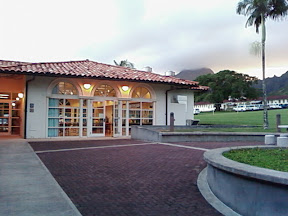
This is a summary of the last 2 classes. In these last 2 classes we observed the mistakes that we all made when wiring our trees. Then we observed the techniques Master Liew used to decide what style of bonsai is best suited for the tree and finally how to style them. I started the night with a practice shot of the building at twilight. Something that Realtors always try to capture. Anyway...
www.RickNakama.com bonsai classI think this Windward Community College Campus is really nice. Look at the design of the buildings and the Ko'olau Mountain Range in the back.
The wire used for bonsai is a special wire sold in nursery or garden stores that specialize in bonsai equipment and tools. It's an aluminum wire that is available in several different gauges, but usually there are only 2 main sizes that you need for working on these types and sizes of bonsai. The picture of the 2 wires below has a nickel (5 cents) profile in it so you can relate to the thickness of the wire. The wire is soft enough to bend and form around the tree trunk and branches. It's best to have it wrapping at a 45 degree angle. The thicker wire is for the trunk and larger branches and the thin wire is for your smaller limbs.
www.RickNakama.com bonsai classwww.RickNakama.com bonsai classwww.RickNakama.com bonsai class
After securing, with wire, each branch that you will be using in your style, you then cut off the branches that are not used. Sometimes you may reserve an extra branch at a spot that you think one branch may turn out more artistic than the other. Later on, you will pick the nicer branch. Every inch of the tree trunk and its branches must have a curve. If there is any part of the tree that is more than 1 inch of straight branch, it's not done according to bonsai style.
www.RickNakama.com bonsai classI think this tree has style. It's one of Master Liew's show pieces. It is an art so really, he says, "as long as it is beautiful, it can be art". I'm sure some "straight" trees might look beautiful, but I think when it's in contrast with a styled tree most artisans will choose the styled tree.
www.RickNakama.com bonsai classwww.RickNakama.com bonsai class
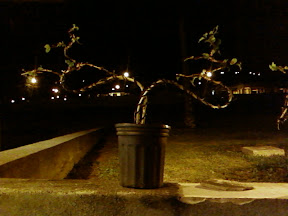
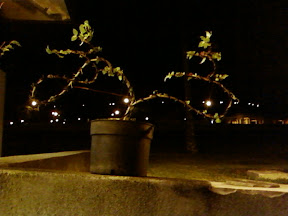
Above are our Hackberry Trees before styling...

Below are our Hackberrry Trees after styling...
www.RickNakama.com bonsai classwww.RickNakama.com bonsai class
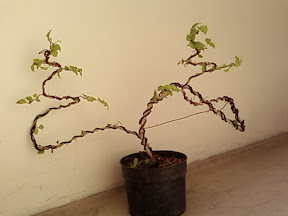
I took those just outside of the classroom. I forgot to take the picture in the lighted classroom, but we needed to make sure that if any branches bend in transport, we know how it's supposed to look. Our trees both had twin trunks. He decided that both our trees were best suited for the style he called "Lovers" or "Father & Son" or "Husband & Wife" etc. This style is actually 2 "Literati" style trunks with "Model" tops. As you can see, although they are the same style, they are different. Kelli's one has that infinity looking 8 in it. Master Liew says it's supposed to represent me doing everything I can to make her happy!!! That might be good for her, but is that good for ME?? =P He always has a story or theme to go with the tree style and that is part of the reason why his bonsai are so popular amongst the art and culture enthusiasts. He is afterall a Ph.D. The story of Kelli's tree style also has some traits known as the Phoenix and the Dragon style. Of course, he's quite a salesman...

Below are the trees in daylight after about 5 days from the night of becoming styled. No new leaves or branches yet, but it's surviving the manipulation.
www.RickNakama.com bonsai classwww.RickNakama.com bonsai class
www.RickNakama.com bonsai classHere's a close up of the wiring and the bends in the "Model" styled section of the bonsai. Now we have to go practice buying our own trees. Part of the lesson is being able to choose the right tree to create the style of bonsai that you want. I want to try and find a tree to make a nice "Full Cascade". We're loving this class and recommend anyone who has the slightest interest to take it!
Related Links: Master Walter Liew Googled, Google Maps of Dragon Garden, Yellowpages Dragon Garden Listing, Full Size Photo Album, My Bonsai Posts.

Friday, October 12, 2007

Art of Bonsai with Master Walter Liew - Lesson 3... receiving our tree and Dragon Garden tour.


www.RickNakama.com Master Liew Dragon Garden BonsaiArt of Bonsai - Lesson 3

I've been so busy since my last post last week. Sorry, I haven't been able to post to my blog more frequently. I hope everyone's still reading. I had a new listing to work on and then a bunch of showing appointments, then offers to present and now we've opened escrow. A bit of relief for a little while.

Lesson 3 was held at Master Walter Liew's bonsai nursery, Dragon Garden Bonsai Culture Center. I took so many pictures and want to share them. Not all are great pictures, but the fastest and easiest way to share them is to just embed the picasa photo album here. So that's how it's displayed below.

The class runs short of time because there are so many styles of bonsai to go over. We briefed over 3 styles that evening. Master Liew showed us how to "stretch" the branches of the trees, similar to how we would stretch before excercising. Then selecting which branches would be used. Finally, we learned how to wire the trees. Our homework from this lesson is to bring home our first trees (supplied with the course, hand picked by Master Liew), stretch and wire them.
www.RickNakama.com Master Liew Dragon Garden Bonsaiwww.RickNakama.com Master Liew Dragon Garden Bonsai
These are our first bonsai trees. They aren't exactly bonsai right now. They are just trees in pots. My tree is the left and Kelli's is on the right. They are trees with longer branches so they should be suitable for semi or full cascade style of bonsai. I believe we have what is called a "Hackberry Tree" <--click for Wikipedia. Interestingly, after reading Wikipedia, I now realize I am growing a type of hemp. Well, at least it is a legal type. Master Liew chose this type of tree as one of the starter trees because it's very hearty. He says it will not die even if we don't know what we are doing. I hope he's right. It's also fast growing and has a soft trunk that can be styled as artistic bonsai. These are saplings so they are young trees and not cuttings from a mature tree.

I will have to post again after Kelli and I get to our homework and wire our trees. For now, please enjoy looking at some of Master Liew's bonsai.


Click to see photo album.

Related Links: Master Walter Liew Googled, Google Maps of Dragon Garden, Yellowpages Dragon Garden Listing, Full Size Photo Album, My Bonsai Posts.

Wednesday, October 3, 2007

2nd Art of Bonsai class with Master Liew. (2回のアートオブ盆栽クラス、リウ先生。)


www.RickNakama.com bonsai classwww.RickNakama.com bonsai class
Lesson 2 of "Art of Bonsai".

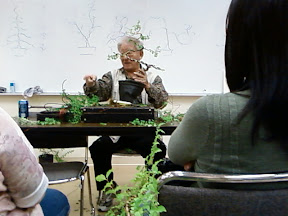
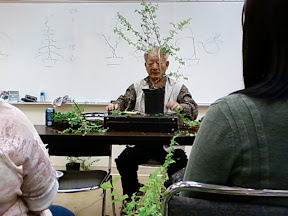
Lesson 2 was a lecture on the "Definition and Composition of Bonsai". Again it was held at the beautiful Windward Community College Campus in the Hale Kuhina Building #115. The class room is pictured above on the left. I didn't realize how white the sky looked when I took the picture! The picture on the right is Bonsai Master Liew.

Bonsai defined... Container Plant. But the "Art of Bonsai" must have these factors in consdiration in order of importance: style, color, bark, pot and stand. We went over an introductory of how to look for "style" in a tree when selecting. With style, "color" and "bark" of the tree also must be analyzed. We should be looking for nice curves and branches in the tree. When that is found, examine the color of the bark and leaves. It should be a healthy color so it makes the person working with it or viewing it feel happy and healthy. If the colors of the leaves aren't perfect, it's possible to correct the health of the tree by working with the soil pH levels. The bark should have character. The preferred tree trunk bark should look old or have some story to it. Again, it's also possible to manipulate the bark with some effort to make it look like it's been aged with some stories behind it. Then the pot has to be paired well with the tree in order for it to be artistically correct. (I know artists will argue about no correct way to do art, but this is for the "Formal" or "Model" style of Bonsai.) The last important factor that defines the bonsai as art is the selection of the stand. With all these properly teamed together, the "tree in a pot" will have potential to be a "bonsai with style" rather than a "junk tree in a pot".

We briefed over a few styles of bonsai. The "Model" which Master Liew calls the traditional way. The "Slant", "Semi-Cascade", "Full-Cascade" and "Umbrella" stlyes are some of his other art forms. Anyway, those will be discussed further another time. This is just a review of the class.

We also spent a few minutes on pot selection because a student wanted to have him discuss pot selection. This is scheduled for later in the course, but Master Liew worked in about 15 minutes of pot selection lecture.

When selecting your tree, you want a tree with nice character, soft trunk, nice bark and most importantly a good root system. There should be 4-5 nice roots spreading in all directions above the soil to provide a healthy, sturdy base for your bonsai. The trunk should be tapering to the top. Try to find sharp turns in the trunk. The 1st branch should be thinner than the trunk and the 2nd branch thinner than the 1st branch, so on and so forth. The species of trees that are recommended for beginners are Ficus and Elm because of their softer trunk that allows for easier manipulation to obtain the style you want. Banyan, bougainvillea, juniper, and many others are also good to use, but some may irritate your skin so Master Liew doesn't recommend it for beginners. A student asked about rose. Master Liew said you can make a rose look nice, but it's not ideal to be worked with for bonsai because the branches are rigid so they will crack and the thorns will no feel good! Bougainvilia has thorns, but I guess that's why it's a more expert type of tree to work with.

Some other trivial things we learned are the meanings of Honolulu and Kampai. Honolulu is the name of the Capitol City of Hawaii. According to Master Liew, Honolulu is known as Sandalwood Mountain in China because of the literal translation. Back when the voyagers first colonized in Hawaii, they began harvesting Hawaii's Sandalwood. A lot of it was shipped to places like China where they really loved the wood and made beautiful tables and stands with this wood. Sandalwood is now very rare and no longer harvested. Another word we discussed was kampai (Japanese) or gambei (Mandarin Chinese) 乾杯 is the Chinese character. It is the word used like "toast" or "cheers" when one raises their glass. In Chinese it means "dry your cup"!

Master Liew continues to educate and entertain us. It's very good when you can learn history, art, philosophy, international culture, science, language and just "Art of Bonsai" while remaining constantly intrigued. I have never had a course instructor that could provide so much discussion on things that most would consider boring, package it in an interesting story, speak about it for about 5-10 minutes and at the end realize he just gave you a 10 minute history lecture, but you still want to hear more about it!! This class and Master Liew is great. Again, any of you reading should take this course in the future.

We're excited for next Tuesday's class because it's going to be at his nursery in Waimanalo. We'll try to get there early so we can stroll through his private art work of 700+ "bonsai with style". We'll also be receiving our first bonsai trees hand selected by Master Liew.

乾杯!! Kampai!! or Gambei!! =)
Related Links: Master Walter Liew Googled, Google Maps of Dragon Garden, Yellowpages Dragon Garden Listing, Full Size Photo Album, My Bonsai Posts.

Wednesday, September 19, 2007

盆栽 Our first night at "Art of Bonsai" class with Master Walter Liew.


www.RickNakama.com art of bonsai with Master Walter LiewTuesday evening was our first "Art of Bonsai" class with Master Walter Liew. The class is held at the Windward Community College Campus on Tuesday evenings and it's 8 sessions from 6pm-8pm. The cost of the course is $80 + $15 to Master Walter Liew for him to provide the proper tree. There were about 30 expected (about 10 more than he expected), but about 25 of us were actually there.

They provided name tags, a course itinerary, a brochure to Dragon Garden Hawaii Bonsai Culture Center/Museum of Living Art, and a 16 month calendar featuring 16 different "Artistic Bonsai with Style" styled by Master Walter Liew himself. I can't find any official website for Dragon Gardens in Waimanalo, Hawaii so I'll let you Google and search on your own.

The course started off with a lecture on the history and philosophy of bonsai. It was about an hour and a half of lecture and very interesting and entertaining. I am impressed by Master Walter Liew's speaking/lecturing skills. He does speak with a heavy Chinese accent, but makes him even more believable and intriguing. He also manages to plug a comedic one-liner about every minute or so. The lecture contains his personal experiences and why he's considered the master of bonsai as well as stories that he integrates to help the students understand the importance of knowing the history and philosophy of bonsai.

Here are some highlights of what I learned last night or just some important information about bonsai:

-Bonsai is popular because of Japan so it's commonly refered to as bonsai.
-Originated in China about 3000 years ago.
-Bonsai started in Japan about 700 years ago.
-First documented in writing about 1100 years ago during the Tan Dynasty.
-Bonsai (盆栽) is the Japanese pronounciation.
-Penzai (盆栽) is the Chinese pronounciation, of course the characters are the same.
-Penjing is an art form that umbrellas over the penzai or bonsai art.
-Penjing covers forests, bonsai, flower arrangement and rocks.
-Feng Shui started in China about 2700 years ago.
-Feng Shui started in Japan about 800 years ago.
-Zen/Buddhist Monks originally practiced bonsai because they would use hard to get leaves or branches from trees that were located all over China for medicines or herbs. It would sometimes take days for the monk to travel to the mountain that has a particular tree growing. This is what started the idea of bringing the tree back and growing it in a pot.
-盆 (bon or pen) means pot.
-栽 (sai or zai) means plant.
-Bonsai became popular in 1829 when Japan brought bonsai to a world trade show in America. Then to another world trade show in Europe. This is how it became widely known as a Japanese culture or art form.
-Most bonsai that is not artistically created with style by a true master of the art would be considered a "junk tree in a pot" to a true master of artistic bonsai. Even though it could seem to be a nice bonsai to some who claim to be bonsai masters with decades of practice.
-Japan's style of bonsai is regular "bonsai". Japan's history and experience with bonsai doesn't go back far enough for them to create "artistic bonsai with style" and cannot fall under the umbrella classification of "peng-jing".
-Properly styled bonsai will create happiness.
-When monks began creating pensai/bonsai for China's royalty 2700 years ago, that's when they began to realize that the potted tree in the interiors would provide fresh air and health. This began the feng shui and zen practices.

Those are the things I have decided are important from the first lecture. Master Walter Liew has been practing the art and style for over 55 years and he says he's now 74 years old and in good health because of his 700+ "premium" bonsai at his Dragon Garden Center. He says that he is know internationally as a master of bonsai with style. My google search of his name seems to back up his claim. The pictures of his 16 bonsai in the calendar also prove his claim. Most collections in books with pictures will be a compilation of several "master's" bonsai work. It's unheard of to have so many bonsai of this quality, style and beauty come from one master.

I look forward to the next class which won't be until 10/2 because Master Walter Liew left for China this morning and won't be in town next week. He's going there for quality trees for bonsai and other supplies.

I'll keep you posted on the bonsai. I'm so excited and seems like a long wait until the next class!!!

Google Satellite view of Dragon Garden.

View Larger Map
Related Links: Master Walter Liew Googled, Google Maps of Dragon Garden, Yellowpages Dragon Garden Listing, Full Size Photo Album, My Bonsai Posts.

Wednesday, September 5, 2007

Honolulu, Hawaii's 25th Anniversary Okinawan Festival 8/31/07-9/02/07


www.RickNakama.com at the 25th Annual Okinawan Festival in Honolulu, HawaiiWe walked to Kapiolani Park on Saturday afternoon to catch a piece of the Okinawan Festival action. This is a big festival that goes on every year for the past 25 years and this is the first time I have ever went... in my life! (Wow!) The picture above shows the crowd. This is just the before the scheduled 6pm "Largest Bon Dance in Hawaii". As you can see, it is quite a large crowd. If you weren't here on Saturday, maybe you were in the other crowd at Aloha Stadium for the 1st U.H. football game of this season.


www.RickNakama.com image of Bonsai at Okinawan Festival, Honolulu
The festival's entertainment and access is free to the public. There are fundraising booths through out the field that accept scrips or cash for hand crafted products, Okinawan artwork, food and beverages. I purchased $10 of scrips and that was enough to get a yakisoba plate, bottled water and a bunch of andagi. I didn't take any pictures of that stuff, but the andagi was very good. Andagi is an Okinawan donut and one of their most popular traditional foods here in Hawaii. I Googled andagi (<--click for results) and came across this website (<--click) devoted to andagi. The schedules had the food boothes closing at 6pm on Saturday but it turned out most of them stayed open to bring in as much fundraising money as they could.

www.RickNakama.com image of Bonsai at Okinawan Festival, HonoluluWe took a look at the bonsai exhibit. Bonsai is "...the art of aesthetic miniaturization of trees by growing them in containers..." according to Wikipedia's definition. <--click for extensive Wikipedia definition.
This was interesting to look at because just last week, Kelli and I enrolled in a "Art of Bonsai" class to take place from 9/18-11/6 every Tuesday evening. It's $95 including 1 plant and being held at Windward Community College. I called their office at (808)235-7433 to enroll. I'll keep you all posted on how these classes turn out. =)

www.RickNakama.com image of Bonsai at Okinawan Festival, Honolulu
日本語by Google Translate.
Related Posts Widget for Blogs by LinkWithin
© 2007 RickNakama.com
Use of this site indicates your agreement to our Terms of Service.